


 ₹https://dealers.stryderbikes.com/cycle-shop/ranchi/hanuman-nagar/stryder-experience-centre-kumar-cycle-auto-stores-in-hanuman-nagar-ranchi--7SKDji/articles/gear-cycle-vs-single-speed-which-one-actually-suit--51ebd0ee-4e65-485f-aae3-3e6f04a5330d
Stryder Experience Centre - Kumar Cycle & Auto Stores, Hanuman Nagar, ranchi
Cycle & Electric Cycle Dealer in Hanuman Nagar, Ranchi, Jharkhand
Booty More Road, Nearby Central Bank Of India, Hanuman Nagar, ranchi, jharkhand - 834009
Request A Call Back
Stryder Experience Centre - Kumar Cycle & Auto Stores Social Feeds in Hanuman Nagar, ranchi
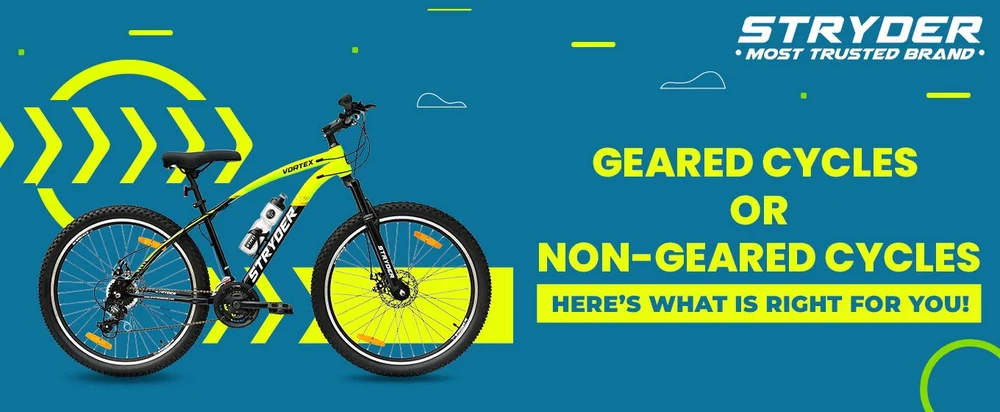
Gear Cycle vs Single Speed: Which One Actually Suits Indian Roads?
The gear cycle vs single speed question comes up at almost every cycle shop counter in India, and the honest answer is that both are right for different riders. A single-speed cycle is simpler and cheaper to own. A geared cycle spreads your effort across more situations. The trick is matching the choice to where and how you ride, not to what looks more advanced.
What a single-speed cycle is
A single-speed cycle has one chainring at the front and one sprocket at the rear. There are no shifters and no derailleurs. Every push of the pedal turns the wheel by the same fixed ratio. Most traditional Indian roadsters, many kids’ cycles and a large share of budget MTB-style cycles are single speed.
What that means on the road: on flat ground you settle into a steady rhythm quickly. On a slope you have to push harder or stand on the pedals, because you cannot make pedalling easier.
What a gear cycle is
A geared cycle uses a shifter on the handlebar to move the chain across different sprockets, changing how far the wheel turns for each pedal stroke. Common setups in India are 7 speed (one chainring, seven rear sprockets) and 21 speed (three chainrings, seven rear sprockets). Stryder’s geared filters on stryderbikes.com, for instance, are grouped into Single Speed, 7 Speed and 21 Speed.
A lower gear makes each pedal stroke easier and is used for climbing and starting from a stop. A higher gear makes each stroke cover more ground and is used for flat roads and descents.
What the number of gears actually means
Twenty-one gears do not mean twenty-one useful settings. Several combinations overlap, and a few extreme ones (largest chainring with largest sprocket, or the reverse) put the chain at an angle and are best avoided. In practice, a 21-speed cycle gives you a wider spread between the easiest and hardest gear than a 7-speed does, which helps on steeper climbs. A 7-speed covers most flat-city needs with less complexity.
The useful question is not “how many gears” but “does the easiest gear make my steepest regular climb comfortable, and does the hardest gear let me keep up on the flat”.
Indian riding situations, one by one
Flat city streets
Both work well. On level roads a single-speed cycle is smooth, quiet and predictable. A geared cycle lets you ride a slightly higher gear and cruise with fewer pedal strokes, which some riders prefer on long, straight stretches.
Flyovers and long inclines
This is where gears earn their keep. A flyover approach in Delhi, Hyderabad or Bengaluru can be a 300 to 500 metre climb. On a single speed you will stand on the pedals or walk part of it. On a geared cycle you drop two or three gears and keep seated.
Stop-and-go traffic
Frequent starts favour a light cycle and an easy gear. A single speed with a moderate ratio handles this fine. A geared cycle handles it well too, provided you remember to shift down before you stop. Riders new to gears often forget, then struggle to restart in a hard gear at a signal.
Uneven and broken surfaces
Surface quality matters more for tyres and frame than for gearing. A single speed has fewer parts to knock out of alignment on rough patches. A geared cycle’s rear derailleur is the most exposed component, so a bit more care is needed when the cycle is dropped or leaned against walls.
Longer commutes and leisure rides
Beyond about 8 to 10 km one way, or on weekend rides of 20 km and more, a geared cycle reduces fatigue by letting you keep a steady cadence as the road changes. Single speeds are still used for these distances, but the rider works harder on any gradient.
Comparison at a glance
Prices above are as listed on stryderbikes.com on the date of writing and may change.
Maintenance and running cost
A single-speed cycle needs a clean, lightly oiled chain and correctly adjusted brakes. That is close to the whole list. A geared cycle adds gear cables that stretch over time, a derailleur that can go out of alignment, and a cassette or freewheel that wears with the chain. None of this is expensive, but it does mean a visit to a mechanic every few months if you ride daily, or learning to do basic indexing yourself.
If you live where reliable cycle mechanics are scarce, that simplicity is a real advantage for the single speed.
Learning curve
Anyone who can ride can ride a single speed. Gears take a week or two of daily use to become second nature. The two habits to build are shifting down before you stop and shifting one gear at a time rather than jumping across the range. After that, gears become automatic.
Who should pick which
A single-speed cycle may suit you if:
• Your routes are mostly flat and under about 8 km each way
• You want the lowest possible upkeep
• You are buying for a child, a beginner or an occasional rider
• You want to spend less and put the saving into a better frame, tyres or helmet
A geared cycle may suit you if:
• Your daily route includes flyovers, slopes or a hilly area
• You ride 10 km or more at a stretch, or plan weekend fitness rides
• You want to ride with a group and match their pace
• You are happy to learn shifting and do light periodic maintenance
Where Stryder fits
Stryder sells both. On the single-speed side, the 26T Street Fire MTB (steel frame, V-brakes, 26 x 2.10 tyres) and the Magnet range (front suspension, dual disc brakes, alloy rims, available in 24T, 26T, 27.5T and 29T) are single speed by design. Its 700C Jungle Cruise hybrid is also single speed with a rigid fork and city tyres.
On the geared side, the 26T Street Fire 21 Speed uses a Shimano 7-speed freewheel with a triple front chainring, and the 700C Jungle Cruise 21S DD brings the same hybrid platform with 21 gears and disc brakes. Stryder also sells 7-speed models under its men’s geared filter.
Pick the drivetrain first, then the frame type. The next article in this series covers MTB vs hybrid vs roadster if you have not decided that yet.
FAQs
Is a gear cycle better than a single-speed cycle?
Neither is better in every case. A geared cycle is more versatile on inclines and longer rides. A single speed is simpler, cheaper and easier to maintain. Choose based on your route and how much upkeep you are willing to do.
Which cycle is better for city riding?
For flat city neighbourhoods and short trips, a single speed is hard to beat. If your city commute includes flyovers or you ride longer distances, a 7-speed or 21-speed cycle will feel noticeably easier.
Are geared cycles harder to maintain?
They need more attention than single speeds, mainly cable tension and derailleur alignment. It is routine work for any cycle mechanic and can be learned at home.
Is a single-speed cycle suitable for Indian roads?
Yes, for most flat urban and small-town routes. Many Indian commuters ride single speeds daily. The limitation appears on sustained climbs and flyovers, where gears make a real difference.
Should a beginner buy a 21-speed cycle?
A beginner can, but does not need to. A 7-speed cycle offers most of the practical benefit with less to learn. If your area is hilly, a 21-speed’s easier low gears are worth the extra complexity.
Decide your route first: flat and short, or climbs and distance. Then compare Stryder’s single-speed and geared cycles side by side on stryderbikes.com, where models are filtered as Single Speed, 7 Speed and 21 Speed. To test how the shifting feels before you buy, use the store locator to find a Stryder retailer near you.